
Industrial Noise Control and Sound Attenuation Design Applications
Sound Propagation Concepts, Acoustic Materials Concepts, and Design of Barriers, Enclosures, Attenuators, Louvers, and Silencers
| Code | AC-01 |
|---|---|
| Days | 3 |
| PDH | 18 |
| Daily Schedule | 09:30–17:00 Hours (Dubai Time GMT+4) |
| Certificate | Yes |
| Instructor | Mohammad Abdulqader |
| Brochure | Download |
09–11 Feb 2026, Online (Zoom)
18–20 May 2026, Online (Zoom)
14–16 Sep 2026, Online (Zoom)
14–16 Dec 2026, Online (Zoom)
About This Course:
All sound calculations meet relevant international standards: ASHRAE, ISO, and ASTM.
Industrial noise control has received increasing importance over the years due to strict noise regulations imposed by many nations worldwide. Noise sources in industry can be from power generation equipment like diesel engines, turbines, generators, motors, and exhaust jet gases. They can be from HVAC equipment like chillers, fans, and pumps. They can be from factory machines, fabrication workshops, and production lines. They can also be from vehicles or the roads.
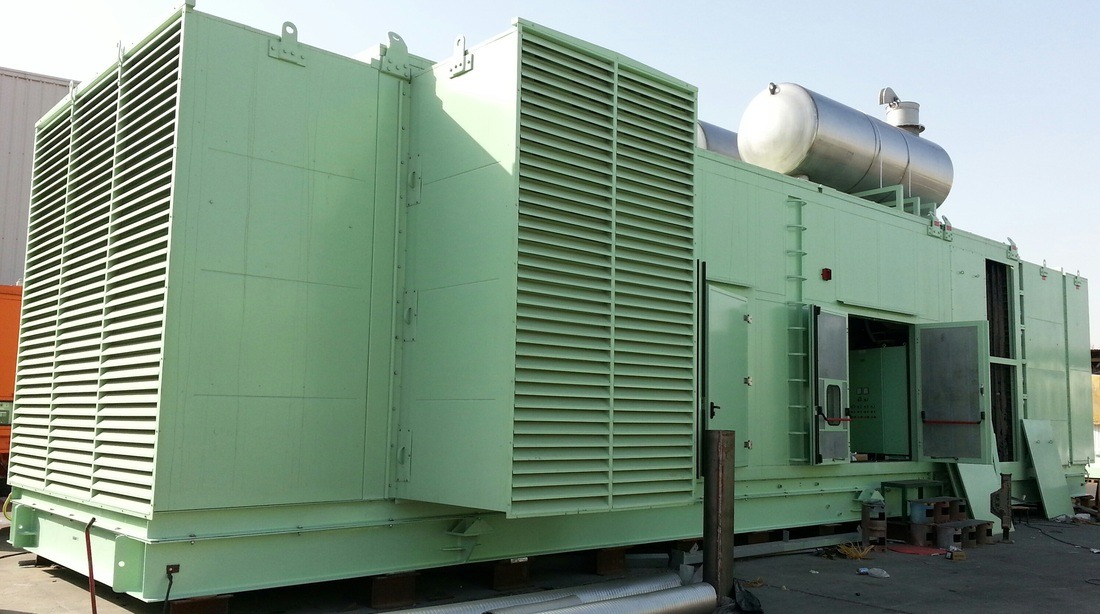
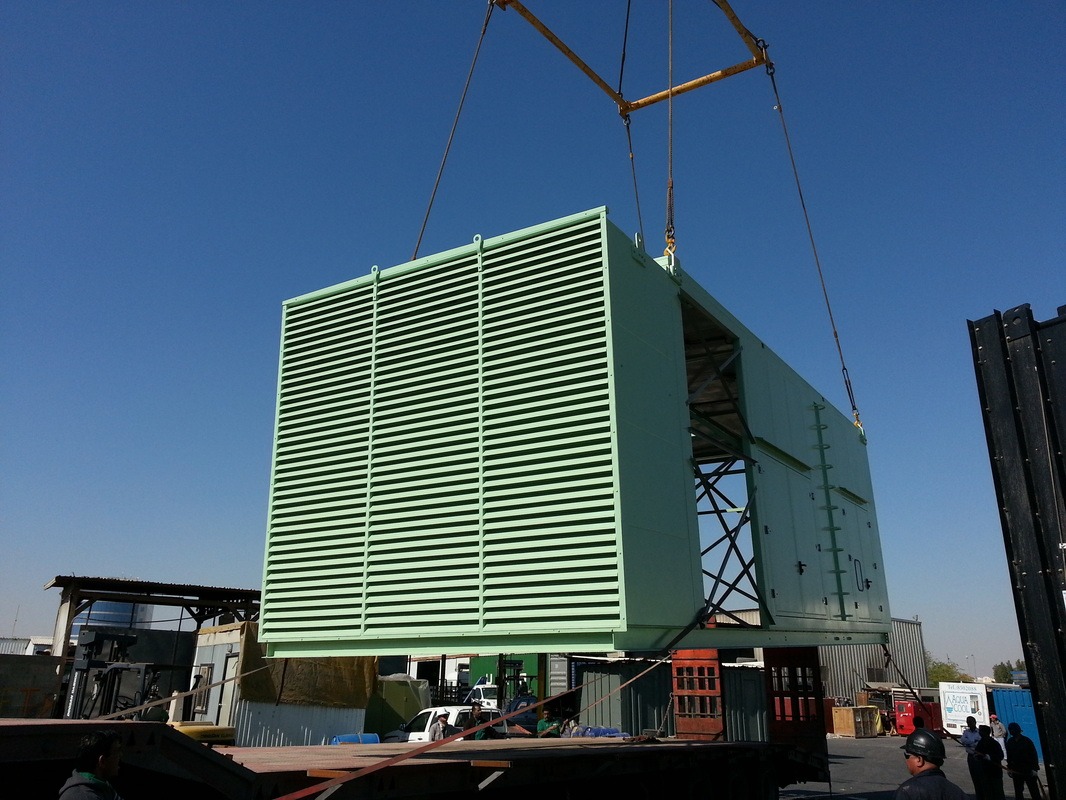
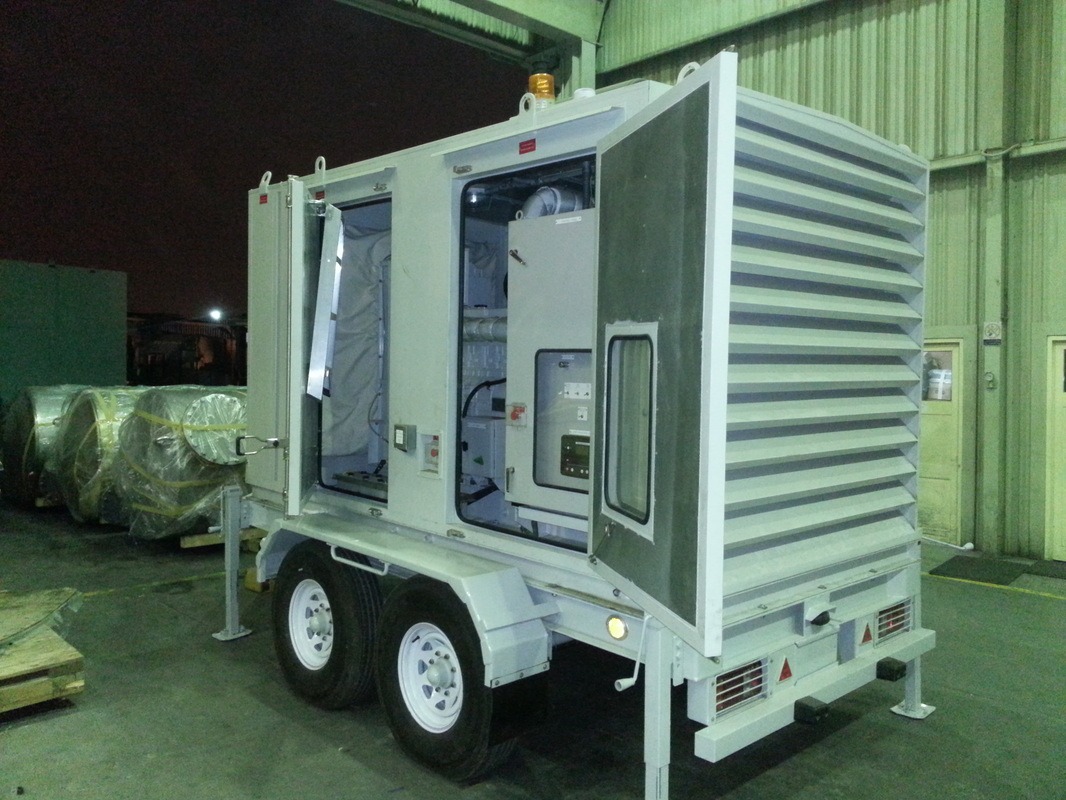
For example, most of the diesel generators sold nowadays are equipped with acoustic enclosures (canopies) to reduce the noise coming from the generators to a level that is safe for human ears as per OSHA standards. One challenge here is that this noise is coming from different sources within the diesel generator, with different frequency spectrums and amplitudes.
The other challenge is that when the enclosure is dropped over the diesel generator unit, it should be designed to allow the air to flow freely in order to cool the unit and supply the necessary air for combustion; this is not easy, as you have to reduce the noise and, at the same time, allow the air to flow without causing loss of pressure across the enclosure.
This 3-day course will explain sound control engineering. Then, it will cover sound propagation, reflection, and absorption, and will cover the noise criteria, noise absorption materials, and criteria for selecting which material. Then, the course will talk about the design of walls, barriers, and enclosures to meet the noise criteria and the design of rectangular sound attenuators and acoustic louvers to achieve noise attenuation and maintain a low pressure drop. Then, it will discuss the design of exhaust silencers.
The diesel generators and HVAC noise will be the case studies of the course because they cover different noise and pressure drop problems.
The course is full of exercises and design workshops. 50% will be presentations and 50% will be practical calculations and design work. All participants will be engaged in practical work during the course.
Learning Objectives:
- To understand the fundamentals of sound physics.
- To understand the propagation of sound in free field and inside rooms/enclosures.
- To understand the dB, dBA, SPL, and SWL and their calculations.
- To understand the acoustic materials’ absorption, reflection, and transmission characteristics.
- To learn how to estimate the average sound absorption coefficient for a room or enclosure.
- To learn the sound specification and estimation for some industrial equipment.
- To understand the calculations of SWL/SPL in free field.
- To understand the calculations of SWL/SPL in accordance with ISO 3744.
- To understand the calculations of average SPL inside the rooms.
- To understand how to calculate the SPL in one room from a sound source in another room.
- To learn how to calculate SPL outside the room/enclosure from a sound source inside the room/enclosure through a wall.
- To learn how to design a wall or partition to achieve certain transmission loss (TL).
- To learn how to design acoustic ducts.
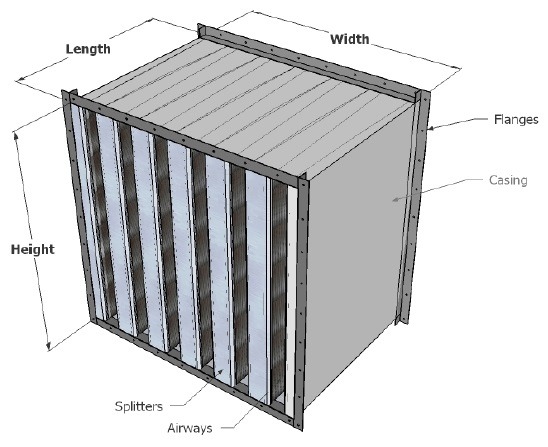
- To learn how to design duct sound attenuators.
- To learn how to design acoustic louvers.
- To learn the calculations of pressure drop across the attenuators and acoustic louvers.
- To learn the concepts and procedures of sound attenuation in HVAC applications.
Course Contents:
Day 1
- Diesel/Gas Generators Noise as a Case Study
- Other Noise Sources: Fans, Pumps, Etc.
- Sound Physics and International Regulations
- What Is the Decibel (dB)
- Sound Octave Bands
- Sound Power (SWL)
- Sound Pressure (SPL)
- SPL Data of Equipment
- ISO 3744, 6798, and 8528–10
- Sound A-Weighting (dBA)
- Sound Propagation in Free Field
- Sound inside Rooms and Reverberations
- Sound Directivity, Absorption, and Reverberation Time
- Sound Insulation (Absorption, Reflection, and Transmission)
- Acoustic Material Types
- Acoustic Material Parameters (Alpha, TL, SRI, and NRC)
- Selection of Suitable Material for an Application
Day 2
- Perforated Sheets Acoustic Performance
- Noise from Inside Rooms to Outside and Calculations
- Acoustic Calculation of Walls and Barriers
- Enclosure Wall Design Exercise
- Rooms and Enclosures Ventilation and Pressure Drop Calculation
- Rectangular Duct Attenuators Design (Sound and Pressure Drop Calculations)
- Rectangular Duct Attenuator Design Exercise
- Acoustic Louvers Design
- Exhaust Noise Design and Selection of Muffler Grade (ASHRAE)
- Muffler Aerodynamic Sizing
Day 3
- Acoustic Enclosure Design Workshop – Selection of Muffler Grade
- Acoustic Enclosure Design Workshop – Design of Walls
- Acoustic Enclosure Design Workshop – Design of Windows and Doors
- Acoustic Enclosure Design Workshop – Design of Rectangular Attenuator
- ACOSTIX AX-S
- ACOSTIX AX-G
- ACOSTIX AX-C
- ACOSTIX Design Exercise 1
- ACOSTIX Design Exercise 2
A one-year license for Acostix software is available to all participants of the course.